Vehbi Koç Foundation M.A. Fellowship
Private Museology: Establishing New Cultural Industries
in Istanbul
My research on private museology encompasses two distinct yet interconnected studies.
Through a comprehensive survey conducted at both museums, I delve into the impact of postmodern museology on visitor perceptions, experiences, and engagement.
This exploration delves beyond the physical museum visit, embracing the entire spectrum of interactions, including participation in auxiliary events and programs. In the second phase of my research, conducted as part of my master’s program in Anatolian Civilizations and Cultural Heritage Management at Koç University (Istanbul), I delve deeper into the intricacies of communication and marketing strategies within the context of visitor practices. With a narrower focus solely on the Pera Museum, I conducted an extensive survey to unravel the nuanced relationship between “new museology” attributes and visitor behaviors. This in-depth analysis, involving over 200 participants and spanning different days and times, seeks to uncover how the evolving landscape of museology shapes visitor experiences and engagement.
These parallel studies not only contribute to the academic discourse surrounding museology and cultural consumption but also hold practical implications for cultural institutions and professionals. By uncovering the intricate interplay between museums, postmodern trends, and visitor dynamics, my research offers insights that can enrich the visitor experience and contribute to the ongoing transformation of Istanbul’s cultural tapestry.
establishing new cultural industries in Istanbul
private museology
book

This study aims at examining the integration of private museology into Istanbul’s culture industry in the twenty-first century, and focuses on the case of the Pera Museum by looking at its communication strategies with regards to visitor perceptions and the museum’s reputation. In this context, this study examines the concept of museology both in modern and postmodern periods, and looks at the developments in Turkish museology in the twenty-first century when private museums carrying a postmodern understanding of museology joined Istanbul’s culture industry. Moreover, based on survey research conducted in January 2009 at the Pera Museum, one of the most distinguished private museums in Istanbul, the study analyzes the effects of postmodern museology on museum visitors. It discusses the ways in which perceptions and expectations of visitors changed as they were exposed to messages and offerings of the private museums during the postmodern period.
September 2011
Publisher: LAP
Language: English
Paperback: 156 pages
ISBN-10: 9783844309492
ISBN-13: 978-3844309492
#talks
müzeler için dijital ietişim stratejileri

Onu kendinize nasıl bağlarsınız?
MMKD – Müzecilik Meslek Kuruluşu Derneği’ni temsilen, derneğin dijital markalaşma çalışmalarını birlikte yürüttüğümüz Elif Koçak’la, Heritage 2015 Fuarı’nda bir sunum gerçekleştirdik. Elif’le, MMKD’de gönüllü çalışmaya başlamadan önce, farklı müzelerde dijital pazarlama stratejileri geliştirirken Twitter paylaşımlarımız üzerinden tanışmıştık. Samimi bir arkadaşlığa dönüşen mesleki paylaşımlarımız gösterdi ki aynı zamanlarda, farklı üniversitelerde, aynı kitapları okuyup müzeler ile tüketi toplumu arasındaki ilişkiyi farklı açılardan analiz eden tezler yazmışız. Bu konuşmanın temelini de o tezlerin dijital toplum ile birliklte analizi oluşturur.
Sunumu üç bölüme ayırdık; ilk bölümde ben MMKD’yi tanıttım ve dernek çalışmalrından bahsettim; ikinci bölümde Elif, çevirisi üzerinde çalıştığımız Digital Engagement Framework kitabından yola çıkarak dijital iletişim stratejilesinin nasıl hazırlanması gerektiğini detaylı bir şekilde ele aldı ve örneklerle zenginleştirdi ; ve son bölümde ben, Haziran 2013’ten beri Elif’le birlikte geliştirdiğimiz ve yine birlikte yürüttüğümüz MMKD dijital iletişim stratejisinin detaylarını açıkladım; hedef kitlesi , kanallar, içerik üretimi vb.


360-degree
data-driven information production
selected publications :: talks
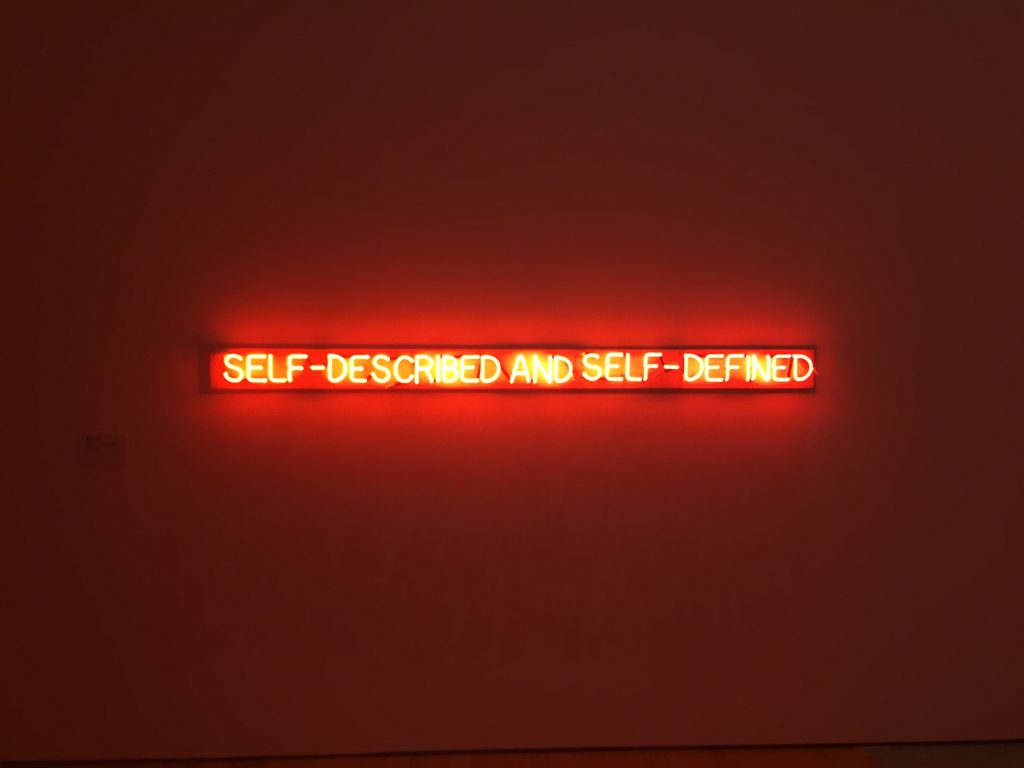
Communication Strategies in Postmodern Museology: Communicated and Conceived Identity of the Pera Museum
The International Journal of the Humanities: Annual Review, 2011, 8 (11): 289-300.
This study aspires to discover the role of museums in Turkish society and to understand the relationship between museums and their visitors. Rather than focusing its limit only on museums’ performances regarding visitor numbers and economic profit, the study looks at the communication tools of museums. In previous years, during the modern museology, the relationship between museums and visitors was at the level of visitors’ visual experience of displayed objects. But in today’s postmodern museology, the requirement is to establish mutual and interactive relations between the museum, its collections, exhibitions, services and their users. Today, many museums are interested in asking the following questions: Who is coming? What do they think about the museum? Is it enough to know who the visitors are? Who is not coming? How can we find out? In order to figure out who is not coming, the museum has to first look at who is coming; a question that can be answered by an audience development research. In that respect, this study focuses on one of the most distinguished museums in Istanbul, the Pera museum, and has three research questions to answer: Which image does the Pera Museum intend to communicate? Which is the visitors’ image of the Pera Museum? How well does the communicated image correspond to the actual image of the Pera Museum? The AC2ID Test, which has been first developed as ACID Test, was applied in order to clarify how the Pera museum defines itself and how people perceive it as well as to measure the communication gap between the museum and visitors.

Consuming in Museums: Visitor Behaviours in Postmodern Era
The International Journal of the Humanities: Annual Review, 2008, 6 (7): 1-6.
While classical sociological approach was stating that museums belonged to privileged societal groups, today, contemporary museology approach not only gives importance to unprivileged social groups but also tries to engage them with museums through their educative role. In the Turkish context, the private museums in Istanbul, emerged after 1980s, appeared as a breaking point in Turkish Museology history as they adopted the new museology conception, contrary to national museums which adopted classical museology approach. Furthermore, it is obvious that since 1980s, paralleling the adoption of liberal economy, new identities emerged in Turkey. Turkish businessmen, pioneering this new development, became more oriented towards cultural and social issues, in addition to their economic gains. Besides, as a consequence of continuing globalization, global culture penetrated into Turkish culture. One can argue that popular culture, mass communication and consumption are the elements of this new period that modified Turkish culture, museology and museum places. In modern contexts museums are considered as sacred, conservative places where national ideology and societal memory are transmitted to the new generations as representation of national identity. To the contrary, with the emergence of private museums in Istanbul, museum spaces are transformed into a synthetic place of shopping mall and public fairground as new services are offered to visitors (café, restaurant, museum shop, education programs, conferences, cinema, etc.). This paper analyzes the ways in which identity is constructed through consumption in museums: through visiting attitudes, volunteering or attaining membership.

Postmodern Museums as an Interactive Matrix and a Consumption Ground: A Study on the Private Museums in Istanbul
Galatasaray Üniversitesi İletişim Dergisi, 2012, 105-132.
Today, the classical sociological criticism of museums, which perceives their function as strengthening the sense of belonging in some, and that of exclusion in others, seems to lose its validity. The new approach to museology has saved museum from its former perception as a temple of muses and constructed it as a hybrid place amidst a shopping mall and a public fairground. This study aims to discuss the notion of postmodern museum that has emerged in Turkey through the establishment of private museums with the concept of new museology, based on the relationship between economic and cultural capital (which became an industrial one). Moreover, the interactive relationship between postmodern museums and visitors is analysed within the context of daily life, leisure, and tourism. Theoretical discussion is complemented with the field studies conducted in Pera Museum and Sabancı Museum.
continue to explore
my portfolio and resume
portfolio*
#SelectedProjects

Migrant Women’s Memory Box
DFG Doctoral Fellowship

Vehbi Koç Foundation M.A. Fellowship

2022/23 Mercator-IPC fellowship

anti-racist feminist policy-making
#WritingForVariousAudiences
Critical Insights on Autonomous Archiving, Intersectional Feminism,
and Participatory Museology
#SpeakingAtDiverseLevels
Critical Discussions on History-Writing, Gender Equality,
and Inclusive Museum
#ParticipatoryCuratorship
publications
I coordinated and edited 4 bilingual publications in TR/GER that highlight the experiences of women immigrated from Turkey to Germany.
These books were created in a participatory process through workshops, making sure the voices of women—often left out of migration history—are recorded.
My scholarly and professional experience in autonomous archiving and intersectional research guided effectively these publications, turning community stories into lasting records as information resources for future actions—for social impact on future research, publication, and political and daily narratives.
exhibitions
I curated two participatory exhibition projects with GKB-migrant women to reconfigure patriarchal stereotypes of ‘migrant’ and ‘woman,’ by opening the stage to migrant women to tell their own narratives—in the face of institutional and structural migration history in Germany:
ABC of the Federal Germany Migrant Women’s Association: A Female Dictionary: A community-built collection of entries reflecting on the association’s experiences in socio-political, economical and cultural domains.
The World from a Female Perspective: A retrospective look at the association’s 12-year-long fighting for equal rights in Germany.
My problem-solver embracing ALL within an intersectional feminist pedagogy approach enhanced these projects’ management into power-sharing by engaging more than 200 women in total—from different regions of the country.


What if goodreads were as colorful as the literature?
Redesigning the goodreads app with a “themes” option
In the realm of literature, the conventional association of reading with me-time, nature, and tranquility has often inspired designs featuring hues of green and beige and their calming tones. However, literature itself is a vibrant spectrum, from the texts within books to their colorful covers. For my inaugural individual UX/UI design project at the Iron Hack BootCamp, I’ve opted to redesign the well-known native mobile app goodreads. This case study unfolds the journey of the vibrant “pop mode” I envisioned for goodreads.


gradmindfull: Empower your academic journey with like-minded people
Discover a holistic approach to student wellness that fosters productivity, creativity, and self-care within a supportive community — all within a single, intuitive iOS app tailored exclusively for students.
In today’s fast-paced world, where physical and mental well-being have gained paramount importance, the need for wellness apps is more apparent than ever. While many such apps offer guidance on exercise, sleep, and mindfulness, there’s a distinct gap when it comes to catering to the unique challenges faced by students. Enter gradmindfull: the all-in-one solution designed to help students relax, feel empowered, and succeed in their academic journey alongside like-minded peers. This case study unravels the story of my varied roles throughout the product design process, which I undertook for my solo UX/UI design project at the Iron Hack BootCamp.


Rediscovering Tranquility: Crafting a Digital Façade for El molí de Can Aulet
Engaging with Nature in UX/UI Design for Rural Tourism
Nestled in the serene embrace of Montseny, El molí de Can Aulet unfolds a story of tranquility, offering rustic cabins that whisper tales of nature’s beauty. Join us on a journey through the digital realms, as we reimagine the Mill’s (El molí de Can Aulet) online façade to echo the essence of “enjoy nature” and redefine rural tourism. This is the case study of our second group project assigned at the Iron Hack, Berlin-UX/UI Design bootcamp.


#SelectedPosts

Bir Oyun, Bir Hikâye, Bir Görsel Dil: Sultan’ın Dijital Kimliği

#ChronicleBuzzy: Yıllık Z Raporunun Instagram Carousel Post Hali

@muzede_drama 2024 Etkinlikleri: 1 Yıllık Takvimin Görselleştirilmesi
resume*
2022/23 Mercator-IPC Fellow at Sabancı University, Istanbul Policy Center, Sept 2022 – Aug 2023
Researcher at DaMigra e.V. (the Umbrella Organization of Migrant Women’s Self-Organizations in Germany), May 2019 – Sep 2022
Coordinator and Curator (Freelancer) at the Historical Museum Frankfurt, June 2014 – May 2023
Business Development Projects (Digital Marketing) at Pera Museum, Istanbul, Jan 2010 – Feb 2012
PhD | IGK—Berlin-New York, Toronto—Center for Metropolitan Studies, TU-Berlin, DFG Doctoral Fellow § TU Compilation Fellow, May 2015 – Feb 2021
Visiting Scholar | City University of New York, CUNY, Digital Humanities, DFG Fellow, Sept – Dec 2016
M.A. | Koç University, Istanbul, Anatolian Civilizations and Cultural Heritage Management, Koç University Fellow, Sept 2007 – Jan 2010
B.A. | Galatasaray University, Istanbul, Sociology, Sept 2003 – June 2007
scholarships
Mercator Stiftung – Istanbul Policy Center, Sabancı University, Fellowship, September 2022-August 2023
Deutsche Forschungsgemeinschaft (DFG), Doctoral Research Fellowship, May 2015-April 2018
Vehbi Koç Foundation, Koç University, Anatolian Civilizations and Cultural Heritage Management, M.A. Program, Full Fellowship, 2007-2009
European Commission, Erasmus Exchange Program Fellowship, Sept. 2005- Feb. 2006
grants
DA BIN ICH: Ehe-unabhängiger Aufenthaltstitel für von häuslicher Gewalt betroffenen Migrant:innen (HERE I AM: Residence Permit Independent from the Husband for Migrant Women Affected by the Domestic Violence), Workshop with the Federal German Migrant Women’s Association, Frauenreferat Frankfurt, October – November, 2022
CAMOC Annual Conference, Travel Grant, 2023
Technische Universität Berlin, Doctoral Research Completion Grant, May – October 2018
CUNY (City University of New York)—Visiting Scholar, DFG-TU Berlin-IGK, September – December 2016
CAMOC Annual Conference, Travel Grant, CAMOC, 2019
CAMOC Annual Conference, Travel Grant, DFG-TU Berlin-IGK, 2015
tools
- Microsoft
- Google Workspace
- Slack
- Canva
- Figma
- Notion
- WordPRess
- InDesign
soft skills
- Digital culture passionate
- User-centric critical
- Solution-oriented
- Intellectually curious
- Thinking out of the box
- Persistent
Language Skills
- Turkish: Native
- English: Mastery
- German: Professional
- French: Professional
memberships
Müzecilik Meslek Kuruluşu Derneği (the Museum Professionals Association in Turkey), MMKD, Co-Founder
ICOM (the International Council of Museums), Independent Member
CAMOC (the International Committee for the Collections and Activities of Museums of Cities) / ICOM, Independent Member
certificates
WordPress Installation
UX/UI Design
MuseumPlus Grundlagen
